Soft Botox is less a product than a philosophy. It asks a simple question: what if the best cosmetic work doesn’t announce itself? In practice, that means keeping doses conservative, respecting anatomy, watching how each face moves, and aiming for facial harmony rather than uniform stillness. The goal is to look rested, balanced, and expressive, not frozen. Done well, friends guess you slept well or changed your skincare, not that you had injections.
I’ve treated hundreds of patients using a minimal approach, including skeptics who feared a mask-like result. They often arrive with screenshots from social media and myths attached, then leave understanding how customization and micro adjustments matter more than any viral technique. The process starts with listening, then reading the face in motion. Below is an in-depth guide to achieving soft Botox results, grounded in medical aesthetics and daily clinic reality.
What “soft” really means
Soft results live in the gray zone between doing nothing and overcorrecting. You’ll still raise your brows, smile, and squint in bright light. You just won’t etch those expressions into your skin as aggressively. Injections target specific muscle fibers to reduce the strength of lines without stripping character. That’s the essence of natural expression Botox.
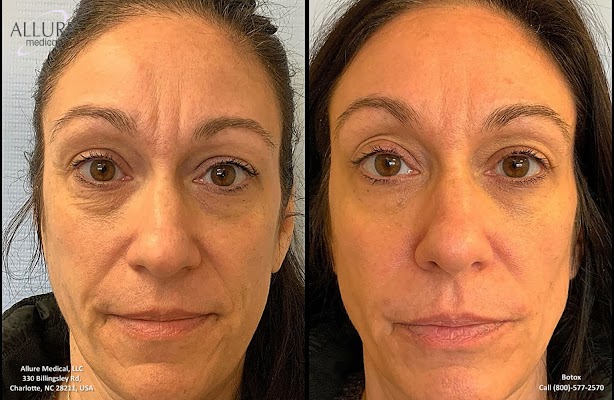
I often test muscle strength with simple commands: lift your brows gently, then strongly; fake a big laugh; frown like you mean it. Small asymmetries show themselves in motion, not at rest. Those cues guide dose and placement. Soft results depend on this anatomy-driven planning, not a standard pattern.
Why Botox is so popular, and what that means for subtle work
Botox popularity has grown steadily for two decades. In many countries it remains the most common cosmetic procedure, with millions of treatments performed annually. Familiarity plays a role, but so does predictability. Botox efficacy studies consistently show improvements in glabellar lines, forehead lines, and crow’s feet within a week or two, with effects that taper over 3 to 4 months in many patients. The safety profile is strong when treatment follows sterile technique and proper injection standards.
Popularity cuts both ways. Social media amplifies botox myths and inflates expectations. It also pressures people toward a uniform look. Soft results push back against that. They respect identity and promote cosmetic enhancement balance. They also align with the botox moderation philosophy favored by those who want graceful aging with botox rather than a hard pause on time.
The anatomy behind soft results
Every brow, smile, and neck posture leaves clues on the face. We use facial analysis botox with face mapping to determine which fibers to relax. Small degrees matter.
Forehead and brows. The frontalis muscle lifts the brows, while the corrugator and procerus pull them down and in. Over-relax the frontalis, and brows can sit heavy, especially in people whose forehead muscles compensate for mild eyelid droop. Soft results usually mean smaller doses across the forehead with slightly more focus on the frown complex. That preserves a natural arch and avoids the “spocked” lateral eyebrow.
Crow’s feet. Orbicularis oculi gives a warm, genuine smile. Too much relaxation can flatten expression or disrupt cheek dynamics. Gentle dosing around the lateral canthus avoids that blank look.
Lower face. The DAO (depressor anguli oris) drags the corners down. Correcting mild downturn with small doses can refresh the mouth without stiffness. The mentalis overcontracts in some patients, causing a pebbly chin; minimal treatment smooths it while preserving lip movement. This is facial balance botox in action, restoring harmony rather than freezing.
Neck bands and posture. Many people notice platysmal bands earlier than expected, sometimes worsened by “phone neck” posture. Prolonged flexion encourages the platysma to tighten and pull the jawline downward. Conservative, posture related neck botox can soften vertical bands, but it must be paired with posture coaching. If someone cranes forward at a laptop all day, injections help, yet they won’t outrun ergonomics.
Less dose, smarter placement: modern techniques for refinement
The last several years brought modern botox techniques that favor precision botox injections over blanket coverage. Think micro units spread across key fibers, artfully spaced to taper effect from center to periphery. We might place a few units in the lateral frontalis to prevent a peak without fully deactivating the muscle. Around the eyes, we feather doses outward to prevent under-eye heaviness.
Dilution matters for spread and control. There are botox dilution myths on social platforms, but in clinic we follow evidence-based reconstitution, documented in product inserts and clinical literature. The goal is dosage accuracy, not magic ratios. Small syringes and fine needles help with micro adjustments botox, especially in thin-skin areas.
Facial symmetry and harmony, not perfection
Perfection reads strange. Human faces are asymmetrical. Soft results support facial harmony botox, not a ruler-straight brow. If one eyebrow naturally sits higher, matching them exactly can feel uncanny. Slight differences keep a face warm and believable.
Facial symmetry correction botox may involve offset dosing: a touch more on the stronger side of the corrugator, or less in the frontalis on the low brow side. These refinements emerge only when we watch expressions from different angles and in different intensities. True personalized aesthetic injections understand that a business smile and a belly laugh recruit different patterns.
Setting expectations during consultation
Expectation management prevents 90 percent of disappointment. I ask patients to name what bothers them and what they fear. The fears are consistent: frozen, heavy eyelids, droopy smile. The answers live in anatomy and restraint.
Botox takes several days to engage, peaks around two weeks, and slowly fades. For soft results, I usually plan a follow-up at two to four weeks for fine-tuning. This is where the artistry vs dosage botox debate becomes practical. We use minimal baseline dosing, then add micro touches if needed. That approach builds trust and protects expression.
The psychological side matters. Cosmetic procedures and mental health intersect in complex ways. Many patients report improved self-image and reduced fixation on specific lines, a small confidence lift that reads as botox emotional wellbeing. Others chase perfection and drift into dissatisfaction. The safest path is realistic outcome counseling botox: clear ranges, no promises of wrinkle erasure, a focus on looking like yourself.
Safety, storage, and standards you should hear out loud
Behind every subtle result is strict process. Evidence based practice starts before a needle touches skin. We check medications, review medical conditions, and rule out contraindications. We use sterile technique, proper skin prep, fresh vials when possible, and follow cold-chain guidelines for botox storage handling. Reconstitution explanation should be straightforward: how many units per milliliter, the rationale for that choice, and why quality control botox standards matter. Shelf life discussion is candid as well, because potency declines with time and improper storage. Patients deserve botox transparency.
Common adverse events are mild and localized: small bruises, brief tenderness, occasional headache. More serious effects are rare in experienced hands. Ptosis, when it occurs, usually comes from product spreading to the levator in the eyelid, often due to injection too low or post-injection rubbing and pressure. Careful placement and post-procedure instructions reduce the risk.
Social media, myths, and cultural perceptions
Botox social media impact shapes what patients ask for. Trends surface weekly, from “no-tox” claims to high-dose transformations. Myths outpace data. I’ve heard everything from “Botox spreads through your whole body” to “the skin becomes thinner.” Neither reflects botox safety studies or the mechanism of action. Real science points to localized neuromuscular modulation with reversible effects. The body metabolizes it over months.
Botox influence culture varies by age. Millennials often prioritize prevention and a botox minimal approach, easing dynamic lines before they settle. Gen Z is curious but cautious, mixed between aging prevention debate and skepticism. Older patients tend to focus on comfort and specific concerns like the neck or mouth corners. Across generations, botox and identity remain front of mind. The best results protect individuality, not overwrite it.
Treatment planning that respects life, work, and habits
Planning is a conversation about your calendar, your tolerance for downtime, and your daily patterns. Athletes sometimes metabolize neuromodulators faster, perhaps due to higher baseline metabolism or muscle recruitment, so we plan slightly shorter intervals or adapt dosing. Frequent public speakers or on-camera professionals often prefer lighter treatments that keep expressive nuance. Musicians, teachers, and customer-facing leaders need strong communicative faces; for them, soft dosing is a non-negotiable.
Tech workers and students bring up “phone neck botox” after noticing vertical bands and early horizontal lines. In these cases, posture related neck botox can help, but we also discuss device height, breaks every 30 minutes, and small strengthening exercises for the deep neck flexors. Injections alone cannot restore a youthful jawline if posture remains chronically flexed.
From skeptic to satisfied: a common story
One of my patients, a late-thirties brand manager, came in worried about losing expression. She needed to project warmth in meetings and on panel discussions. We agreed to a conservative botox strategy: light frown complex dosing to ease the “angry 11s,” gentle feathering at the crow’s feet, and almost no forehead work to protect her communicative brow lift. At two weeks, we added micro units to a lateral frontalis strip that spiked cosmetic botox NC under surprise, then stopped. She returned at three months, still expressive, lines softer, no comments from colleagues beyond “you look rested.” That is subtle facial enhancement botox at its best.
Addressing common fears without sugarcoating
Frozen foreheads result from oversimplified maps and too much product, not an inevitability. Heavy lids can happen in people who rely on their frontalis to prop open the eyelids. If I see that compensation, I shift dosing to the glabella and leave the botox NC upper forehead alone, or I use micro units with careful spacing. Droopy smiles usually stem from injections that encroach on the levator labii or DAO imprecision. Knowledge of small boundaries around the mouth protects function.
Bruises happen, especially in vascular areas. I warn patients ahead of time and offer timing advice around events. Avoiding blood thinners when appropriate, using ice, and applying pressure help. These are small trade-offs that keep results soft and downtime minimal.
Maintenance without mission creep
The temptation, once you enjoy results, is to add more areas. I caution people to stabilize a routine first. Two or three cycles teach us your metabolism, your personal peak, and your fade curve. Most patients return every 3 to 4 months, while some stretch to 5 or beyond. Different muscles wear off at different rates. Crow’s feet may last longer than the frown complex or vice versa. We adapt.
With time, many patients need fewer units for the same result. The muscles learn new resting patterns. That’s when the botox upkeep strategy becomes a light touch rather than a full reset. Soft results often age more gracefully than aggressive correction, because there’s no dramatic cliff when product fades.
Education and consent that actually inform
Informed consent isn’t a signature; it’s a conversation. Patients deserve a botox education guide that explains mechanisms, timelines, common side effects, and what to do if something feels off. We cover botox clinical studies in plain English and avoid medical jargon. For skeptics, I offer botox explained scientifically first, then botox explained simply, because both roads lead to trust building if you listen.
Transparency about what Botox can’t do is as important as what it can. It won’t lift extra skin or fill volume loss. Deep creases at rest may need skin quality work or a touch of filler, depending on the case. The interplay of treatments is part of modern cosmetic dermatology botox planning within broader aesthetic medicine.
Trends, innovations, and the near future
Botox trends come and go, but a few innovations are durable. Diluted microdroplet patterns for oily T-zones and pore refinement, sometimes called microbotox, can smooth texture without altering expression when placed very superficially. Newer neuromodulators and biosimilars have arrived in some markets, and early botox research along with botox efficacy studies continue to refine duration and onset profiles across brands. The future of botox likely means more personalized dosing algorithms informed by imaging and motion analysis, not one-size-fits-all maps.
One promising area overlaps with mental wellbeing. There is ongoing discussion around botox confidence psychology and whether easing frown lines can reduce negative feedback loops. While results vary and causality is tricky, many patients report a subtle mood lift. It’s not a mental health treatment, but it can support emotional comfort when expectations are realistic and outcomes modest.
Technique standards that protect subtlety
Injector technique directly determines how soft your result looks. Fine needles, slow injection, and careful depth control limit spread to the right plane. Small doses layered over sessions give better control than a big push all at once. Following botox treatment safety protocols makes subtle work repeatable, not lucky.
I keep a photo and video record of baseline expressions, then match them at follow-ups. That way, micro adjustments are based on evidence, not memory. Over time, a personal map emerges: how your left corrugator responds to two units compared to three, where a half-unit at the lateral brow prevents a quirky peak, when to skip an area entirely. This is muscle based botox planning, and it’s how you avoid the overdone look.
Where ethics meet aesthetics
Botox ethics in aesthetics starts with the question: who benefits? If someone’s self-critique spirals, I slow down or suggest a pause. If a patient wants to erase all lines and erase individuality with it, I explain the trade-offs and offer a conservative trial. For many, subtlety is not a compromise; it’s the point. Cosmetic enhancement should align with identity and values, and it should feel like empowerment, not pressure.
I also address cost transparently. Soft approaches sometimes look less expensive per session because they use fewer units, but they may require a brief touch-up. Conversely, a slightly higher first visit with planned refinement can reduce total spend by avoiding misfires. Good communication prevents surprises.
Practical planning, step by step
The path to soft results follows a rhythm that balances structure with personalization. Use this tight, real-world sequence to frame your journey.
- Pre-visit: gather a short list of goals, note any previous injections, allergies, and daily medications or supplements that affect bleeding. Consultation: discuss concerns and fears, review anatomy in motion, align on subtle outcomes, and set a two-week check-in. Preparation: avoid alcohol and unnecessary blood thinners for a day or two if safe; arrive with clean skin; plan for minor bruising. Treatment: low to moderate dosing targeted to muscle function, with attention to symmetry and expression; avoid rubbing or heavy pressure afterward. Follow-up: assess at two weeks with photos and videos; add micro units only where needed; schedule maintenance based on how you metabolize.
Aftercare that supports finesse
Aftercare instructions reinforce the subtle path. Keep your head upright for several hours post-injection, skip intense workouts and saunas until the next day, and avoid pressing on treated areas. If a tiny bruise appears, cold compresses help the first day, then warm compresses after. If anything feels unusual, reach out. Providers would rather hear from you early than try to fix a late surprise.
Longevity varies, but lifestyle integration helps. Good sleep, balanced diet, consistent sun protection, and stress management support skin quality. Botox doesn’t fix everything, yet it pairs well with a rational skincare routine and, when needed, light resurfacing or energy-based treatments to improve texture without adding volume.
When subtle goes too subtle
Under-treatment is a risk when playing safe. If nothing changes at all after two weeks, we adjust. I’d rather start there than walk back an overcorrection. Sometimes a patient realizes they do want a bit more line softening in bright sun or in photographs. We nudge up carefully, often by a total of 2 to 6 additional units across multiple points. Soft doesn’t mean ineffective; it means precise.
What long-term care looks like
Over a year or two with routine maintenance, many patients report they need fewer units for the same effect. That likely reflects muscle deconditioning and improved skin behavior due to reduced mechanical stress. Think of it as botox long term care that becomes lighter over time. If you take breaks, most lines return to baseline. There is no evidence that properly administered treatment worsens aging; if anything, it may slow the deepening of dynamic lines. Still, breaks are fine and sometimes refreshing. Aging gracefully with botox means respecting cycles and choosing when to treat.
Final thoughts from the chair
Subtle results appear simple from the outside, yet they rest on an informed chain: science backed botox, anatomy-driven planning, steady hands, and honest conversation. If you want a face that feels like your own, start small, favor personalization over trends, and give yourself two visits to fine-tune. Ask about sterile technique, storage, and reconstitution. Look for a clinician who watches you speak and emote, not just someone who dots a template across your forehead.
Soft Botox is not a compromise. It’s a craft. And when the craft is respected, you gain the best kind of compliment: nobody knows you had anything done, and you don’t feel like you did either.